
Your TPA Controls Your Claims Data. Take It Back Before Renewal.
By Jude Odu
June 22, 2026
Renewal season starts now. Over the next few months, you will review your stop-loss rates, sign off on plan design changes, and likely renew with the same third-party administrator you used last year. Before you sign anything, ask one question. Can you get every line of your plan’s claims data, in full detail, whenever you want it, at no extra charge? For most self-insured employers, the honest answer is likely a no. That gap is a fiduciary problem, and renewal is the only time each year when you have the negotiating power to fix it.
About 67% of covered U.S. workers are in self-funded plans. When your plan is self-funded, the money paying those claims is yours. The data describing those claims is a plan asset too. Yet many plan sponsors never hold their own claims data. They see summary reports built by the same vendor whose pricing they are supposed to be checking. You cannot audit what you cannot see.
Claims Data Is a Fiduciary Asset, Not a Vendor Report
Under ERISA, you owe the plan a duty of prudence and a duty to act for the exclusive benefit of plan participants. Courts read that to include a duty to monitor your service providers and the fees they collect. You cannot monitor a TPA or a PBM on trust. You monitor with data. That means member-level claims detail, paid amounts, allowed amounts, billing codes, place of service, and the full PBM transaction record showing what the plan paid and what the pharmacy received.
Jude Odu makes this point throughout Model Optimal Care: End U.S. Healthcare Waste, One Health Plan at a Time. The waste in the system, an estimated $1.6 trillion a year at 2025 spending levels, does not sit in some distant part of the market. A large share of it sits inside your own claims file, in duplicate charges, upcoded bills, and prices set three to five times above benchmark. Roughly one in five claims contains an error. You will never find those errors in a vendor summary report.
Read What Your TPA Contract Actually Says
Pull your administrative services agreement and find the data section. Many contracts quietly limit your rights in four ways. They restrict how often you can pull full claims files. They charge a fee for each data extract or for a feed to an independent auditor. They label pricing and network discount terms as proprietary and withhold them. They require the TPA’s written approval before you can hire a third party to audit claims.
Each of those terms moves control of a plan asset from you to your vendor. Each one weakens your ability to meet your duty to monitor. If your contract contains them, you are paying for a service while signing away the means to check that service.
The Law Has Removed the Vendor’s Cover
The Consolidated Appropriations Act of 2021 stripped away the legal excuse for data blocking. Gag clauses that prevent a plan from accessing its own de-identified claims and provider-specific cost and quality information are prohibited. Plan sponsors must attest each year that their contracts contain no such clauses. The Consolidated Appropriations Act of 2026, signed in February, went further. It mandates full rebate pass-through and gives plans annual rights to audit PBM pricing and rebate data. Most of those provisions phase in by 2028 and 2029, so the contract you sign now should already meet them.
Read that obligation plainly. If your TPA or PBM contract still restricts your access to claims and pricing data, you may not be able to make a clean attestation. The annual attestation is not a paperwork exercise. It is a signed federal statement about whether you actually control your data. Treat it as a deadline that forces contract repair, not a box to check.
What Full Data Access Lets You Do
Once you possess your complete claims data, three actions become possible. First, you can run an independent claims audit and potentially recover overpayments from duplicate and upcoded charges. Second, you can benchmark hospital and provider prices against the actual allowed amounts hospitals must now disclose under the strengthened CMS price transparency rule enforced since April 2026, and against the first Medicare negotiated prices for high-cost drugs, which took effect in 2026 under the Inflation Reduction Act. Third, you can test your PBM for spread pricing by comparing what your plan paid against what the pharmacy was reimbursed. None of this is possible on summary data alone.
The financial case is direct. Since one in five claims contains an error and your plan pays tens of millions in claims a year, a credible audit will uncover real savings. The cost of an independent data feed and an auditor is small compared against what is contained in those errors.
Things to Do Before You Sign Your Renewal
One. Request your full member-level claims file and your complete PBM transaction file this quarter, before renewal terms are set. How the vendor responds tells you what your contract really allows.
Two. Rewrite the data clause in your administrative services agreement. Require full claims data on demand, in a usable format, at no extra charge, with the right to share it with an auditor of your choosing.
Three. Add an unrestricted audit right. Remove any clause that requires vendor approval to audit or that caps audit frequency or recovery.
Four. Tie your gag clause attestation to a contract review. Confirm in writing that no term blocks access to claims or provider cost and quality data before you attest.
Five. Document the process. Record the request, the vendor response, and the fiduciary committee decision. Your fiduciary protection comes from a documented, repeatable process, not from a good outcome.
You renew once a year. That is your one window of negotiating power. Use this renewal to take back control of your claims data. Everything else in cost containment, from price benchmarking to PBM oversight to waste recovery, depends on it.
More about this topic can be explored in the book, Model Optimal Care, available here.
get Moc Insights
Get the latest healthcare policy analysis for self-insured professionals and healthcare leaders committed to eliminating waste and optimizing care delivery.
About the author

Jude Odu
Founder of Health Cost IQ and author of Model Optimal Care. 25+ years in healthcare technology.
Learn more at judeodu.com
Categories
The Book
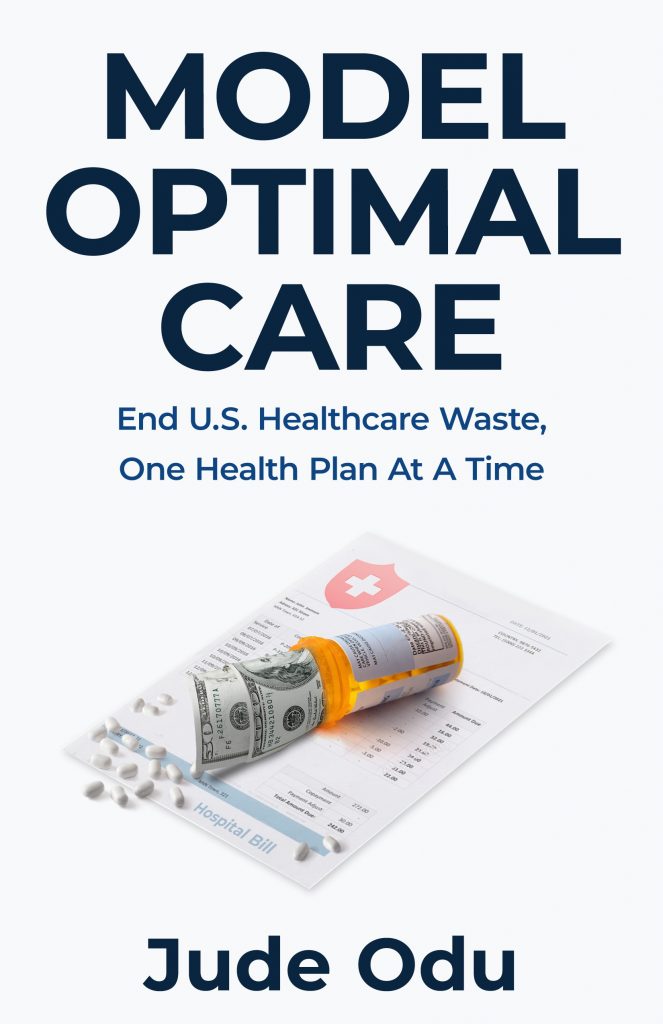
The definitive guide to ending U.S. healthcare waste. One health plan at a time.