
More Than Half of Employers Are Raising Deductibles in 2026. Try This Instead.
By Jude Odu
June 8, 2026
The 2026 planning numbers are in, and most plan sponsors are reaching for the same lever. Mercer projects the total health benefit cost will pass $18,500 per employee this year. The Business Group on Health pegs the median cost trend at 9%, trimmed to 7.6% only after plan design changes. And how are large employers closing that gap? More than half of large employers, 51%, told Mercer they are likely to raise deductibles and other out-of-pocket costs for 2026, up from 45% the year before.
Raising the deductible feels like action. It is not. It moves cost from the plan’s ledger to your employees’ bank accounts. The total spend stays the same. The waste inside that spend stays the same. And as a fiduciary, you now carry a harder question: did you cut cost, or did you just relocate it onto the people the plan exists to protect?
Cost-shifting does not reduce cost. It hides it.
A higher deductible lowers your claims spend in one way only. It makes employees skip care. Some of that skipped care is low value. Much of it is not. People defer the primary care visit, the medication refill, the early screening. Those deferrals show up later as emergency visits, inpatient admissions, and large claims. You did not remove the cost. You delayed it and added high interest.
There is a second problem. Cost-shifting hits your lowest-paid workers hardest. A $2,000 deductible is a rounding error for an executive and a genuine barrier for a warehouse worker earning $40,000. When access to care tracks income inside your own plan, you create both a retention risk and, in some cases, a discrimination exposure. The lever that looks neutral on a spreadsheet is not neutral in practice.
The real money sits in waste, not in your employees’ wallets
The U.S. healthcare system wastes between $760 billion and $1.6 trillion every year. That is roughly 25% to 30% of total national health spending. Administrative complexity alone burns about $352 billion annually. None of that waste lives in some distant part of the system. It sits inside the claims data of your own self-insured plan: duplicate billing, upcoding, services billed but not rendered, out-of-network leakage, and prices that bear no relationship to quality.
This is the argument at the center of my book, Model Optimal Care: End U.S. Healthcare Waste, One Health Plan at a Time. Self-funded plans now cover 67% of workers with employer health coverage. That makes employer plans the single largest place to attack waste, and it makes plan sponsors the people with both the data and the authority to do it. You already pay for the waste. You can choose to remove it instead of asking your employees to absorb it.
Your fiduciary duty points toward fixing waste, not shifting cost
ERISA requires you to act prudently and in the sole interest of plan participants. A prudent process is not satisfied by defaulting to a deductible increase because it is the easiest line item to change. Courts, regulators, and plaintiffs’ firms are now focused on whether plan sponsors took reasonable steps to control plan costs through vendor oversight, not whether they passed costs to workers.
Document the difference. When you can show a benefits committee reviewed claims for overpayment, audited the PBM, used real price data to steer care, and only then made measured design changes, you have a defensible record. When the file shows nothing but a deductible bump, you have a record that invites questions.
Five actions that cut real cost this year
Audit your claims for waste. Pull 12 to 24 months of claims and run them for duplicate charges, billing errors, and overpayments. Recovery of even 2% to 3% of total spend often exceeds what a deductible increase would have saved, and it costs your employees nothing.
Use the new hospital price data. As of April 2026, CMS enforces rules requiring hospitals to publish actual median and percentile allowed amounts drawn from real claims data, not the old estimates. Compare what your plan pays against those benchmarks and steer volume toward fair-priced, high-quality facilities.
Put your PBM contract under a microscope. The CAA 2026 expanded your audit rights and disclosure requirements. Confirm rebate pass-through, check for spread pricing, and benchmark your specialty drug pricing. Pharmacy is forecast to rise 11% to 12% this year, so this is where savings compound.
Attack administrative complexity. Review how many vendors touch a single claim, where prior authorization adds cost without adding value, and which processes you pay for twice. Administrative waste is the largest single category, and much of it is inside your control.
Build the governance to sustain it. Stand up a fiduciary committee with a written charter, a regular meeting cadence, and minutes. This is the structure that turns one-time savings into a repeatable process and gives you the fiduciary record regulators now expect.
Make the harder choice before open enrollment
You will most likely face pressure to raise the deductible again next year. Before you do, run the audit, review the price transparency data, and pressure-test the PBM contracts. If you still need to adjust plan design after removing real waste, you will do it from a position of evidence, not reflex. Your employees keep their access. Your plan keeps its money. And your file shows you did the work a fiduciary is supposed to do.
get Moc Insights
Stay ahead of the conversation on healthcare waste, cost containment, and the MOC framework.
About the author

Jude Odu
Founder of Health Cost IQ and author of Model Optimal Care. 25+ years in healthcare technology.
Full Bio →
Categories
The Book
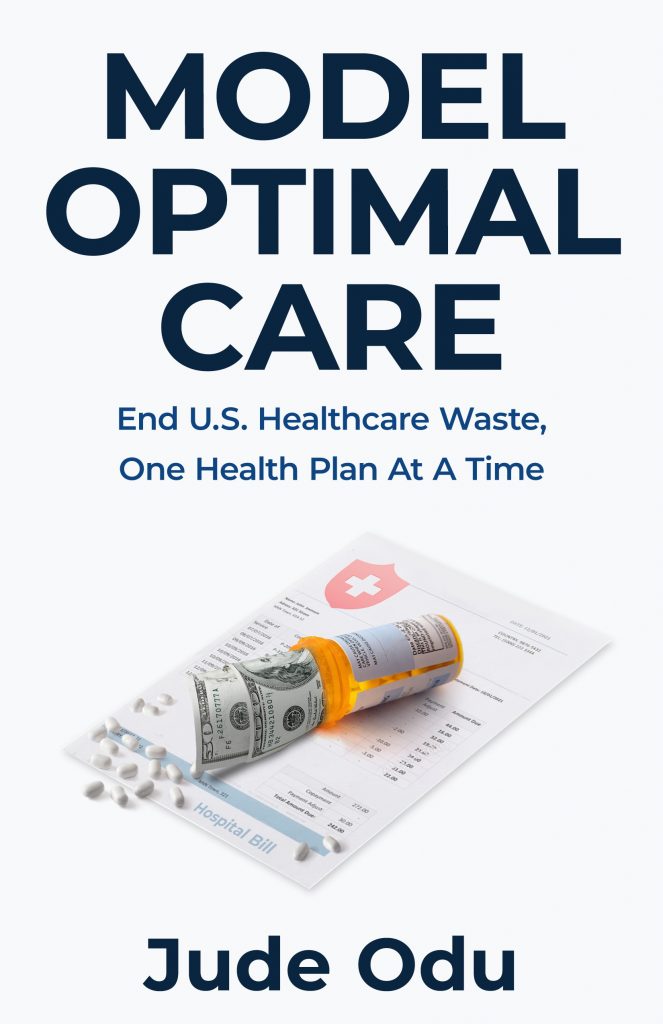
The definitive guide to ending U.S. healthcare waste. One health plan at a time.