
CMS Ended Fake Hospital Price Estimates in 2026. Your Plan Must Act on Real Data Now.
By Jude Odu
May 18, 2026
For five years, hospitals complied with federal price transparency requirements by publishing “estimated allowed amounts.” Those numbers were largely fictitious. They were placeholders constructed from internal hospital calculations that often had little relationship to what your plan actually paid for the same procedure at the same facility. As of April 1, 2026, that ended.
CMS began enforcing the strongest hospital price transparency rules in the program’s history this spring. If your plan has not yet used this new data to benchmark what you are paying, you are behind, and you are exposed.
What CMS Changed This April
The CY 2026 Outpatient Prospective Payment System (OPPS) final rule eliminated the estimated allowed amount from required hospital disclosures. In its place, hospitals must now post three specific numbers: the median allowed amount, the 10th percentile allowed amount, and the 90th percentile allowed amount, all calculated from 12 to 15 months of actual claims history.
For the first time, you can look at a hospital’s machine-readable file and see what payers actually paid, within a statistical range built from real transactions, not guesses. The rule also requires hospital CEOs or designated senior officials to sign a written attestation that posted prices are “true, accurate, and complete.” That accountability is new, and it changes what courts and regulators can expect of plan sponsors.
CMS issued 10 civil monetary penalties against non-compliant hospitals in 2025, more than doubling the prior annual pace. The enforcement signal is clear: hospital price transparency is no longer a soft requirement.
Why This Is an ERISA Problem, Not Just a Data Problem
Your self-insured health plan is subject to ERISA. That means you have a fiduciary obligation to ensure the plan pays only reasonable amounts for covered services. That standard is not met by simply accepting whatever your third-party administrator’s network dictates.
For years, the “reasonable” standard was difficult to apply to hospital claims because actual market pricing was inaccessible. Courts gave plan sponsors latitude because the data did not exist in usable form. That argument no longer holds.
As of April 1, 2026, actual median allowed amounts for hospital services are publicly available in machine-readable format, required by federal law, and certified accurate by hospital leadership. A growing wave of ERISA health plan fiduciary cases in 2025 and 2026 has put plan sponsors on notice. Jones Day’s May 2026 analysis of employer health plan administration points to a convergence of three pressures: class action lawsuits over PBM and drug pricing management, inquiries from a coalition of 14 state financial officers calling for payment integrity analysis, and federal price transparency initiatives that give fiduciaries the data they need to demonstrate prudent decision-making.
If your plan is paying above the 90th percentile for common procedures at hospitals you can now benchmark in minutes, that gap is difficult to defend.
Three Ways to Act on Real Pricing Data Now
Audit your highest-volume procedure codes.
Pull your plan’s paid amounts for the top 20 to 30 procedure codes by volume. Compare those to the median allowed amounts now publicly posted by the hospitals your members use most. Gaps of 30 percent, 50 percent, or more are common. That is your overpayment exposure, visible and quantifiable for the first time.
Use the data to support reference-based pricing.
Reference-based pricing anchors your plan’s payment to a defined multiple of Medicare rates or to a published market benchmark, rather than accepting whatever network-negotiated rates your insurer passes along. The transparency data now provides a publicly available, legally certified benchmark. Self-insured employers who have deployed reference-based pricing strategies built on this data have documented savings of 15 percent to 30 percent on hospital claims across multiple plan years.
Strengthen your stop-loss negotiations with real benchmarks.
If you are renewing a stop-loss policy this cycle, your carrier will price attachment points based on projected claim costs. Transparent pricing data gives you and your TPA a real market reference for those conversations, and a basis for challenging attachment points that reflect inflated network rates rather than actual market values.
The Risk of Waiting
The ERISA standard for health plan fiduciaries is the same prudent person standard that governs retirement plan investments. Retirement plan sponsors have long been expected to benchmark fees against publicly available comparisons. Courts are now applying the same logic to health plan claims.
In Jude Odu’s book Model Optimal Care: End U.S. Healthcare Waste, One Health Plan at a Time, the core argument is that most plan sponsors operate without visibility into their own claims data, vendor contracts, or market pricing, and that this gap drives the estimated $1.6 trillion in annual U.S. healthcare waste. The April 2026 CMS changes remove one of the most significant excuses for that gap. Real hospital pricing data is now publicly available. The question is whether your plan has the infrastructure and the governance to use it.
Most self-insured plan sponsors still rely almost entirely on a TPA to manage claims, with no independent benchmarking and no systematic process for comparing paid amounts against market data. That approach carried legal risk before April 2026. It carries more now.
Where to Start This Week
You do not need a new vendor or a major plan redesign to begin. Start with this: pull your plan’s top procedure codes by paid amount from your most recent claims run. Identify the two or three hospitals where your members get most of their care. Look up each hospital’s machine-readable file and find the median and 90th percentile allowed amounts for those procedures. Calculate the difference between what your plan paid and what the market data shows.
That exercise should take no more than a couple of days. If the gaps are small, you have documentation that your plan is pricing claims reasonably. If the gaps are large, you have the starting point for a real cost containment strategy and the fiduciary basis to act on it.
If you want a structured framework for building this kind of visibility into your plan on an ongoing basis, visit modeloptimalcare.com for resources built for plan sponsors, TPAs, and advisors working through this process.
get Moc Insights
Stay ahead of the conversation on healthcare waste, cost containment, and the MOC framework.
About the author

Jude Odu
Founder of Health Cost IQ and author of Model Optimal Care. 25+ years in healthcare technology.
Full Bio →
Categories
The Book
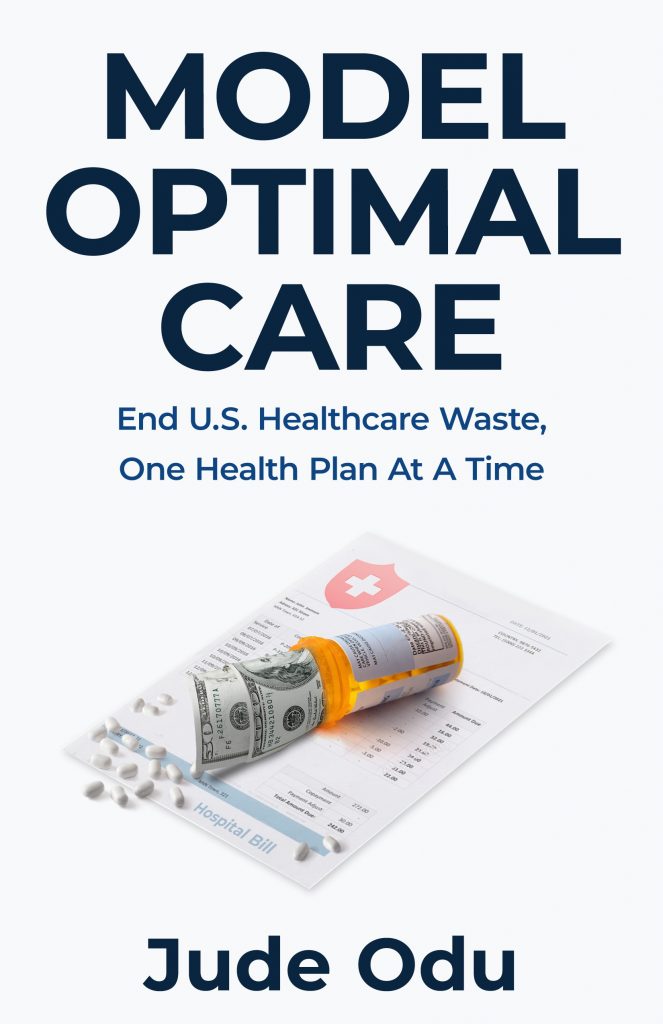
The definitive guide to ending U.S. healthcare waste. One health plan at a time.