
Your PBM Contract Is Now a Fiduciary Liability: Lessons from Three Landmark Lawsuits
By Jude Odu
June 1, 2026
Johnson and Johnson. Wells Fargo. JPMorgan Chase. Three of the most sophisticated companies in the country, with full legal departments and dedicated compliance teams. All three are now defendants in ERISA class action lawsuits. None of the claims target their retirement plans.
The suits target prescription drug benefits. Specifically, how each company managed its pharmacy benefit manager relationship, what oversight it applied, and whether that oversight met the standard of a prudent plan fiduciary. If you run or oversee a self-insured health plan, these cases are the clearest signal yet that health plan fiduciary exposure is no longer to be taken lightly.
What the Plaintiffs Actually Allege
The three cases, Lewandowski v. Johnson and Johnson, Navarro v. Wells Fargo, and Stern v. JPMorgan Chase, follow a consistent pattern. Plaintiffs allege that each employer’s plan fiduciaries failed in their duty to prudently manage the PBM relationship. The specific allegations include failing to negotiate competitive contract terms, allowing the PBM to operate with undisclosed conflicts of interest, and permitting the PBM to charge significantly above market rates for generic drugs.
In the JPMorgan case, plaintiffs alleged that CVS Caremark, the plan’s PBM, raised prices on 366 generic drugs by an average of 211 percent. Some plan participants were paying more for those medications than uninsured patients buying at a retail cash price. In March 2026, a federal district court allowed the prohibited transaction claim to proceed, finding that JPMorgan acted as a fiduciary when it selected and renewed the PBM arrangement. That ruling confirms a specific point: selecting and renewing your PBM contract is a fiduciary act under ERISA.
Why This Decision Should Concern Every Plan Sponsor
Courts have now said that choosing and keeping a PBM is a fiduciary function. That means you cannot inherit a vendor relationship from your broker, sign a renewal at the back end of a busy open enrollment cycle, and treat your duty as satisfied. The selection process must be documented. Ongoing PBM performance must be monitored. The compensation your PBM receives, direct and indirect, must be assessed for reasonableness at each contract cycle.
Most self-insured employers, including large ones with sophisticated HR teams, do not have this documentation trail. They have a contract. They have invoices. They do not have evidence of a formal prudent decision-making process applied to that contract at every renewal.
The plaintiffs’ bar has noticed. Litigation firms that spent two decades filing 401(k) excessive fee cases have now turned toward the $5 trillion employer-sponsored health market. The J&J, Wells Fargo, and JPMorgan cases are not outliers. They are the opening wave. Jones Day’s May 2026 analysis of ERISA fiduciary litigation describes a convergence of class action suits, DOL scrutiny, and state enforcement that is reshaping compliance expectations for every plan sponsor.
What ERISA’s Prudent Person Standard Actually Requires
ERISA requires plan fiduciaries to act with the care, skill, prudence, and diligence that a knowledgeable expert in similar circumstances would apply. For health plan administration, the DOL has made clear this standard reaches vendor selection, vendor oversight, and fee reasonableness assessment.
In practice, the standard requires three things from you.
First, you must be able to show how you selected your PBM. A competitive RFP process, documented evaluation criteria, written rationale for the chosen vendor. Not just a broker recommendation or a verbal agreement to keep the incumbent.
Second, you must be able to show you understand what your PBM is paid. The Consolidated Appropriations Act of 2026 now requires PBMs to disclose all direct and indirect compensation to plan sponsors. Your obligation is to receive that disclosure, review it, assess whether the compensation is reasonable, and document your conclusion in writing.
Third, you must demonstrate ongoing performance monitoring. Formulary compliance rates, spread pricing identification, generic substitution rates, specialty drug utilization. Not as a one-time audit when you start the relationship, but as a structured quarterly or annual governance practice with documented results.
Five Steps to Reduce Your Exposure Now
You do not necessarily need to terminate your PBM relationship to address this risk, but you do need to install the oversight structure that should have been in place from the start.
Request a full compensation disclosure under CAA 2026. Ask your PBM to provide all rebates, spread pricing, administrative fees, and any payments from manufacturers or networks. Document when you received it and that you reviewed it. If your PBM resists or delays, that itself is material information.
Benchmark your generic drug pricing. Third-party analytics vendors can compare your PBM’s actual allowed amounts against market benchmarks. The JPMorgan complaint shows exactly what happens when a plan cannot demonstrate it ever checked. A single benchmarking exercise gives you both a baseline and documentation that you looked.
Review your PBM contract’s renewal history. If you renewed within the past two years without a competitive process, record the rationale in writing. If you cannot articulate a documented reason, you have a gap that plaintiffs’ lawyers are specifically trained to find.
Conduct a formulary audit. Identify whether your formulary reflects clinical evidence or preferred placement driven by manufacturer rebate deals. Rebate-driven formulary design, where a less effective branded drug is preferred over a less expensive generic because of rebate economics, is a documented source of both waste and legal exposure.
Build a fiduciary review calendar. Every PBM contract renewal should trigger a formal written review, recorded in committee minutes or a dedicated governance log. Courts look for that paper trail when evaluating prudence claims.
The Larger Pattern
In Model Optimal Care: End U.S. Healthcare Waste, One Health Plan at a Time, Jude Odu identifies administrative complexity and vendor opacity as two of the largest categories of waste in employer-sponsored plans, at an estimated $369 billion annually in administrative waste alone. The PBM litigation wave is what happens when those inefficiencies meet a legal standard that demands accountability.
The ERISA prudent person standard has not changed. What has changed is the willingness of plaintiffs’ law firms to apply it to health plans, and the courts’ stated willingness to let those cases proceed. Your PBM relationship does not have to be a liability. But without the governance structure to show you managed it prudently, it is currently one. Start with a vendor compensation audit and a documented benchmarking review. Those two steps will tell you what you owe your plan and what you owe the participants who depend on it.
get Moc Insights
Stay ahead of the conversation on healthcare waste, cost containment, and the MOC framework.
About the author

Jude Odu
Founder of Health Cost IQ and author of Model Optimal Care. 25+ years in healthcare technology.
Full Bio →
Categories
The Book
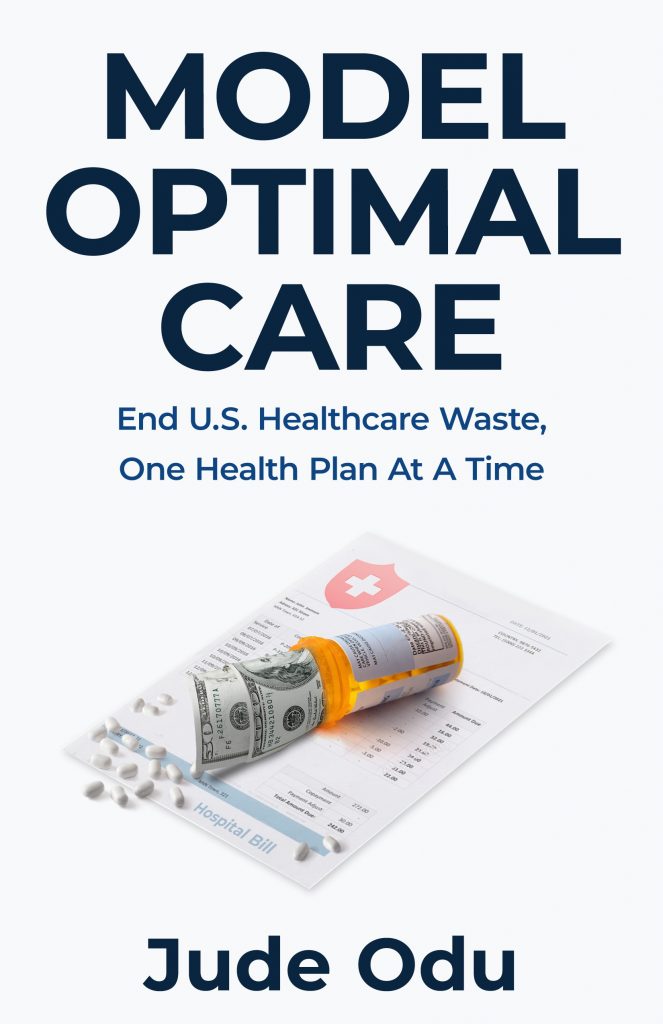
The definitive guide to ending U.S. healthcare waste. One health plan at a time.