
By Jude Odu
May 25, 2026
Employers project a 10% jump in health care costs for 2026. A significant portion of that number traces directly to one drug class. GLP-1 agonists, the medications originally developed for type 2 diabetes and now widely prescribed for obesity, account for an estimated 14% of all prescription drug spending in employer-sponsored health plans. At $400 to $700 per member per month, a few hundred employees on these drugs can add millions to your annual plan spend in a single benefit year.
If you are a self-insured plan sponsor without a formal GLP-1 coverage policy, you are already behind. More importantly, you may already have a cost problem you cannot yet see in your data.
What Is Happening in Plans Right Now
As of 2026, 49% of large employers cover GLP-1 drugs for obesity, up from 44% in 2024. Separately, 79% of employers report seeing increased GLP-1 utilization. The Business Group on Health’s 2026 Employer Health Care Strategy Survey found that many employers reported actual usage came in higher than projected, and that covering GLP-1s for obesity materially increased pharmacy benefit cost. The Business Group on Health projects pharmacy costs rising 11 to 12% in 2026, with GLP-1s as a primary driver.
The Legal Risk Most Plan Sponsors Are Missing
Coverage decisions on GLP-1s do not sit in a legal vacuum. A January 2026 analysis from Morgan Lewis flagged a critical intersection: obesity can qualify as a disability under the Americans with Disabilities Act in certain circumstances. If your plan covers GLP-1s for type 2 diabetes but excludes them for obesity, you may be creating a disparate impact problem.
A blanket exclusion without documented clinical rationale is the most exposed position your plan can hold. This does not mean you must cover GLP-1s for every indication. It means the design of the exclusion, and how you document that decision, matters for legal defensibility.
Three Coverage Structures and Their Trade-Offs
Coverage for diabetes only, exclusion for obesity. This keeps short-term pharmacy spend lower but carries ADA exposure and limits long-term clinical value. Plans using this structure need clear documentation and legal review of plan language before relying on it.
Prior authorization with lifestyle program requirements. This is the most common approach. Employees must meet BMI thresholds, obtain a prescription from a designated provider, and enroll in a structured weight management program. More legally defensible than a blanket exclusion. Mercer’s 2026 guidance shows most mid-market employers landing here.
Structured eligibility with outcome-based renewal criteria. The more rigorous approach. Coverage is approved at enrollment; continued coverage requires documented outcomes at 90 or 180 days. If a member does not achieve a defined threshold, typically 5% body weight reduction, coverage for the obesity indication does not renew. This structure removes spend on non-responders and gives your plan a documented, clinical basis for every coverage decision.
What Self-Insured Plans Can Do Right Now
Pull your GLP-1 utilization data this week. Your PBM should give you a breakdown of GLP-1 claims by indication, member, prescriber, and cost. If you cannot get this within five business days, vendor transparency is already a problem for you. In Model Optimal Care, I identify data access as the foundation of every cost containment strategy. You cannot manage what you cannot see.
Carve out GLP-1s to a specialty formulary tier. Separate utilization management protocols give you more control over prior authorization, rebate negotiation, and outcome tracking than a standard formulary placement.
Require enrollment in a lifestyle program as a condition of coverage. GLP-1s produce better sustained results when combined with behavioral change programs. This requirement also strengthens your clinical rationale and ties coverage to outcomes.
Build renewal criteria tied to clinical outcomes. Write the minimum response threshold into your prior authorization renewal process. Document it in the plan document and communicate it clearly at enrollment.
Your ERISA Fiduciary Obligation Is Direct
ERISA and CAA require plan fiduciaries to act with prudence. That standard applies to benefit design. A plan covering GLP-1s without utilization management is not acting prudently with plan assets. A plan excluding them without legal review and documented clinical rationale is exposed from a different direction.
Your plan committee minutes should reflect that you reviewed GLP-1 utilization data, evaluated coverage policy options, obtained legal counsel on ADA implications, and made a deliberate decision with both the plan’s financial health and member outcomes in view.
The ERISA Advisory Council’s April 2026 recommendation that clinical coverage determination-makers should be treated as plan fiduciaries adds further urgency here. Plans with documented, clinically grounded policies will be in a legally defensible position.
Once more, plan to pull and review your pharmacy data this week, then schedule a further review with your PBM and legal counsel.
For a framework to guide that review, visit modeloptimalcare.com.
get Moc Insights
Stay ahead of the conversation on healthcare waste, cost containment, and the MOC framework.
About the author

Jude Odu
Founder of Health Cost IQ and author of Model Optimal Care. 25+ years in healthcare technology.
Full Bio →
Categories
The Book
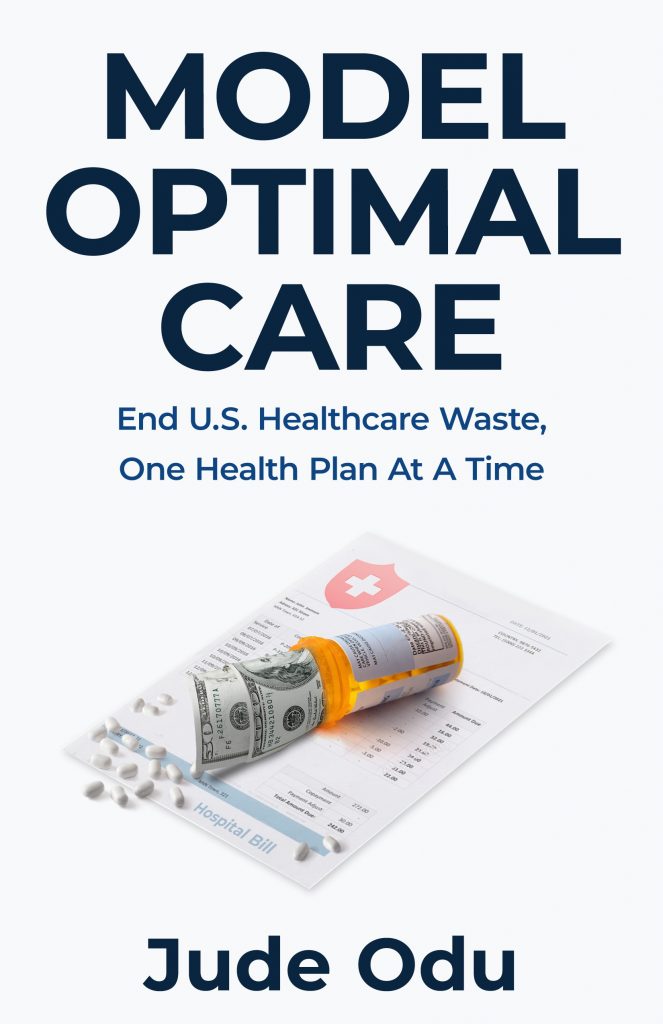
The definitive guide to ending U.S. healthcare waste. One health plan at a time.